Wednesday, May 18, 2011

Terremoto

What You Need
Sweet or semi-sweet Riesling
Pineapple sherbet
Beverage pitcher


I was sitting on the couch in my boxers watching TV the other day and happened upon an episode of No Reservations featuring Tony's trip to Chile. During the first segment, I think, Tony is taken to a restaurant called El Hoyo in Santiago where he's introduced to a drink called a terremoto... a combination of a Chilean white wine called pipeño and pineapple ice cream. The word terremoto is Spanish for earthquake... the drink is so named either because it was invented for some journalists covering an earthquake back in the 80s or because it's supposed to get you inordinately shit-housed in a hurry.  Mixing wine and ice cream has just the right amount of fucked-upedness to make my ears perk up, so I wanted to make it. Thus I hurried to the magical internets to find a recipe. There I discovered plenty, all of which said "combine pipeño and pineapple ice cream". Real fucking helpful, assholes. So, I made my own.

Monday, May 16, 2011

Fucking Badass Guide to Eating India


Ah, India. The land of those fucking ridiculous Bollywood movies. Seriously, why is no one saying this? Their movies are straight fucking insanity. I realize that there's a big cultural thing there, but I'm savvy enough to know when something was created in the depths of an ether binge.
Back on topic... the funny thing about Indian food is that there's really no such thing. India is such a huge, diverse place that calling anything just Indian is like calling a specific song music and expecting someone to know exactly what you're talking about. There are more than 30 defined regions that produce their own, often wildly different cuisine.
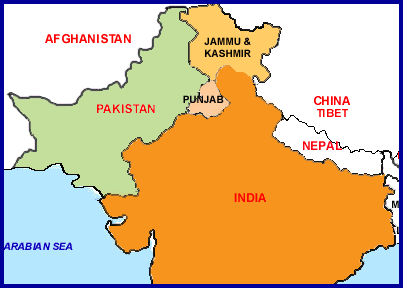
Now, this doesn't mean that every time you walk into an Indian restaurant you're going to see a wildly different menu. Far from it. Your typical Indian place actually specializes in food from the Punjab region of Northern India and Eastern Pakistan. This is where you get your tandoori bread, tikka masala, Biryani, and most of the rest of the foods you're familiar with. Punjabi cuisine is well-known for its wide range of dishes, with everything from spicy to mild and vegetarian to carnivore, including beef. That's right, the country famous for its spiritual love of cows does serve beef in many regions. To make things easier, I will continue to refer to all things Punjabi as Indian, unless otherwise noted.

Shit You Should Know about India

1. As part of their quest to be the biggest dickheads in history, the British got their first foothold in India around the time of the American Revolution and ruled until the Indian people finally kicked their limey asses out in 1950. Despite the relatively peaceful end to British rule (thanks a lot, Gandhi) the Indians did their fair share of Brit killing. They also produced some awesome propaganda posters.




2. Much like the food, there is no "Indian" language. There are more than a thousand languages spoken on the Indian subcontinent, 29 of which are spoken by more than a million people each. The most common, Standard Hindi, uses its own alphabet called Devanagari which looks like a cross between Elvish and Klingon. Luckily for us everything is approximated in English, so it's spelled like it sounds. Pronounce away!

Monday, May 9, 2011

Motherfucking Booze Time: Cabernet Sauvignon


Young Earth Creationism at work
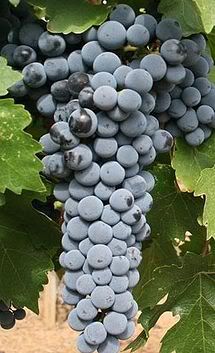
Wine has been around for eight thousand years. According to many young Earth creationists, the earth has been around for just less than 10,000 years. What does this mean? Well, first it means that young Earth creationists are fucking morons. Second, it means wine must be pretty fucking important for it to be on a list with "name all the animals", "figure out what this 'sex' thing is for", "avoid dinosaurs", and "plant fossils to confuse people 10,000 years from now". Over the centuries, lots of wine has been made, drank, and debated. It stands to reason then that the most popular wine in the world would be tried and tested throughout the ages. A taste so studied and reflected on that its very name evokes the essence of what wine is and should strive to be. Whatever it is, it certainly couldn't be an accidental creation less than three hundred years old that we didn't really know anything about until the 90s.

The History of Cabernet Sauvignon or Hangin' Tough by New Wine on the Block
Cabernet sauvignon originated in the 17th century. That's right, Cab is about as old as the Liberty Bell. Compare that with pinot noir, which has been grown in the Burgundy region of France alone since 100AD. Wine has been around practically as long as grapes, so it's not surprising that the history is somewhat hard to pin down for most varietals. Within the past 20 years, they've actually begun doing DNA testing on grapes to see where certain types come from. Before the late 90s, rumor had it that cabernet sauvignon was an ancient grape use to make Roman wine around the time of legendary historian Pliny the Elder. That was complete fucking horseshit. Cab is actually the offspring of Cabernet franc and Sauvignon blanc, likely a chance crossing sometime in the 17th century. To recap: a grape called Cabernet sauvignon is a cross between a grape called Cabernet franc and a grape called Sauvignon blanc. We needed DNA to tell us this.
Despite its relative new comer status, Cabernet sauvignon is possibly the most well-known red wine in the world. It is planted in virtually every vineyard in every corner of the globe. Only Merlot is more widely available, a fact only true as recently as the 1990s.

Monday, April 25, 2011

Medium Rare: A Love Story


If you're a regular reader of this blog, then you've undoubtedly learned a thing or two about steak.There's one subject concerning nature's most perfect food that I've avoided, and for good reason. That subject is: degree of cooking.
Degree of cooking (or "steak doneness") is a divisive topic to say the least. Everyone has their opinion. I'm normally a very live and let live kinda guy... tastes vary, and if you like something a certain way then that's the way you should have it. However, I have a real problem with one-half of the doneness debate, which I'm addressing now.
There are two kinds of people when it comes to degree of cooking, as illustrated in the following images:


and


As if you couldn't have guessed by the title of this post, I'm firmly in the first camp. However, I try not to be an asshole about it. There are a lot of myths and misconceptions about steak doneness and, as a result, cooking and eating meat in general. It is these misconceptions that lead most people to request and then consume poorly prepared (overcooked) steak. It's akin to ordering a soggy bowl of cereal. These myths also keep many people from ever trying a properly prepared steak, for fear of death.
My aim is to address the four myths that cause most people to shy away from eating a properly cooked steak, starting with the biggest one of all, which I will now indicate with bold text and a large font.

Wednesday, April 6, 2011

Mojito Part 2: La Moderno

What You Need
Granulated cane sugar
Carbonated water (soda, seltzer, sparkling... just don't use tonic)
Fresh limes
Fresh mint
Light/White rum (decent quality, Bacardi or higher)
Ice
Highball glass
Jigger
Shaker


The classic mojito is like Desi Arnaz... a bit dated, but still fun, enjoyable, and pretty badass. You've made the classic mojito and enjoyed it, but as far as I'm concerned, there are a couple of problems. First and foremost is inconsistency. As many times as I've made them, every fucking one is different and it's next to impossible to get it just the way you like it. Personally, I like a nice kick of mint in my mojito. The classic I made for this blog ended up having more lime than mint. Sometimes I'll get it too sweet, or not sweet enough, or overly minty. The reason for this is our second problem... the use of a muddler. Muddling isn't very precise, especially when you're working with three ingredients. Plus, a bent spoon will work in a pinch, but if you're going to make these semi-regularly (and you are), it'll get real old real quick. I cannot justify owning a specific tool that is used in just one fucking drink. Luckily, our two problems have one solution... a little thing I like to call mint infused simple syrup. It's an easily measurable, easily mixable replacement for both the mint and the sugar, making the mojito la moderno a lot like Cuban model-turn-singer Mayra Veronica... trim, sleek, and just about perfect.

Thursday, March 31, 2011

Mojito Part 1: The Classic

What You Need
Powdered sugar
Carbonated water (soda, seltzer, sparkling... just don't use tonic)
Fresh limes
Fresh mint
Light/White rum (decent quality, Bacardi or higher)
Ice
Highball glass
Jigger
Shaker


Summer is slowly approaching and it's time to start thinking about my summer cocktail for 2011. This has been a personal tradition of mine for about five years... each summer I seem to pick one cocktail and stick with it all season long. Last year was the summer of the mint julip, a southern classic. This year, the mojito has her Cuban claws deeply embedded.


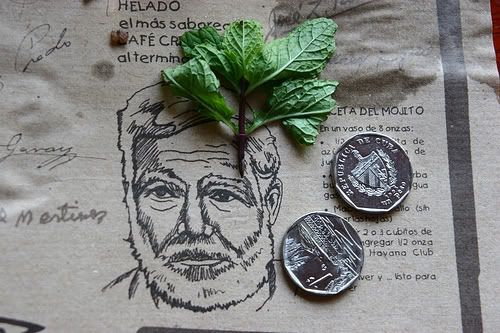
As far as I'm concerned, the mojito is a perfect cocktail: not too sweet or heavy with a great flavor and plenty of zest (from both the rum and the lime). Plus, Ernest fucking Hemmingway drank them, and the only thing that man liked more than drinking was killing shit with huge guns. He is truly a man to be emulated.
This is part one of a two part series, focusing on the classic Cuban mojito. Part two will be a my more personal twist on the drink... but it's important to know where you come from, so here's the classic.

Thursday, March 17, 2011

Motherfucking Booze Time: Stouts and Porters


Today is Saint Patrick's day and, more importantly, I'm heading to New Orleans tomorrow. These two things are pretty much unrelated... I'm going to Louisiana to see some friends for spring break and I don't need a fucking holiday to tell me when to drink. Everyone knows the best time to drink is now, followed closely by later. However, Saint Patrick's Day and my trip do have one thing in common: they're both to be a celebration of my favorite kind of beer.

I like my beer the way I like my women: dark, cold, slightly bitter, and filled with alcohol. Stouts (also called porters, but we'll get into that fucking subject later) are the darkest and among the most alcoholic of beers. Now, I'm not one to drink something just because it's loaded with booze... but when you're looking for something with a powerful taste, alcohol comes with the territory. I can't handle the generic, pissy beer taste of your Budweiser and Miller Lite. I want something with some balls. Whether you're a beer drinker or not, I urge you to give a stout a try. It really is a whole different league as far as flavor goes... and, hey, they even make some of them with chocolate.

The History of Stouts or The Best Way to Get Too Drunk to Carry Shit
The history of the stout/porter dates back all the way the 1700s. Like most booze history, the actual story is a little fuzzy at first... getting wasted for 300 years tends to change shit. Allegedly, the grandfather of the porter was actually a blend of ale, beer, and really fucking strong beer called Three Threads. This was a drink of the working alcoholic, primarily ship and street porters a.k.a. people whose job is to carry heavy shit. This was the primo drink for about thirty years, until a brewer managed to brew a single beer that had a similar taste (or it might have been brewed just because... this is one of those fuzzy areas) which he called Entire and the rest of England called porter after the folks that drank them. This same brewer was the first to age beer BEFORE it was sent out to the drinking public, lending even more punch to the brew.
Porters, along with dark, extremely alcoholic beers in general, were hot shit until about 1800, when the first pale ale was brewed. Tastes changed and porters got milder and milder, until most breweries stopped making them all together, leaving them behind as relics of a drunken century. With the micro-brew revolution, everything that was old is new again, and stouts are back in a big way.

Sunday, March 13, 2011

Lemon Glazed Chicken

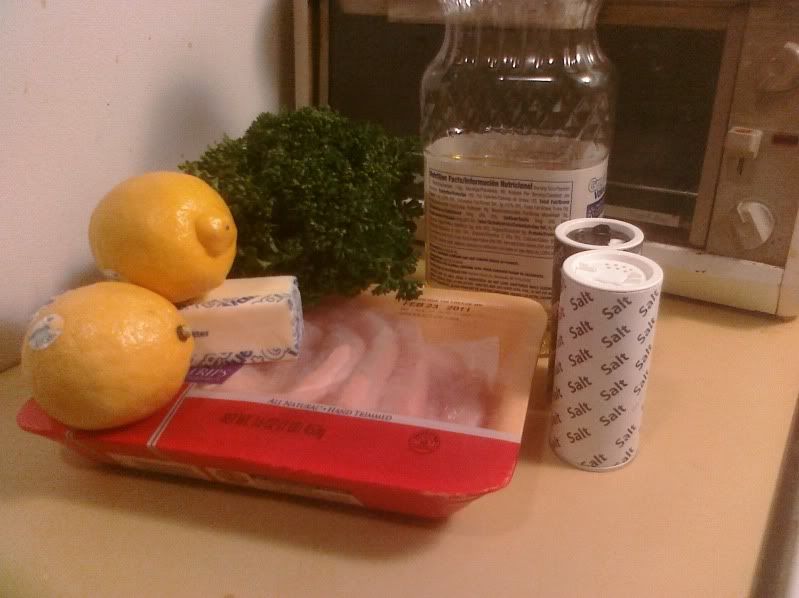
Ingredients
Chicken breast (strips, fillets, halves... whatever blows your skirt)
Lemons
Fresh parsley
Vegetable oil
Butter
Salt
Pepper


Thus sayeth Natalie Dee


After a slightly lengthy vacation/prison sentence, I'm back to the blog. I would apologize for my absence, but I don't care what the fuck you think, so... there's that.
When you go to the grocery store to gather lemons to make this (which you will do if you know what's good for you) make sure you get the best lemons in the pile. This requires a little fruit investigation. You want a lemon that feels heavy but not hard. When you squeeze it there should be some give... a hard lemon means a thicker rind, which means you get less juice. Obviously, you'll want to avoid any lemons that have brown splotches, but green splotches are ok. Lemons change from green to yellow based entirely on temperature, not age, so a bit of green is perfectly fine. You can expect about three tablespoons of juice from your lemon, but that doesn't mean you should substitute bottled for fresh squeezed. Bottled lemon juice, while fine for cocktails, doesn't have the same delicate flavor as fresh lemon juice, so buy the goddamn fruit.